Why Bay Area residents received alerts for Mendocino quake despite feeling minimal shaking
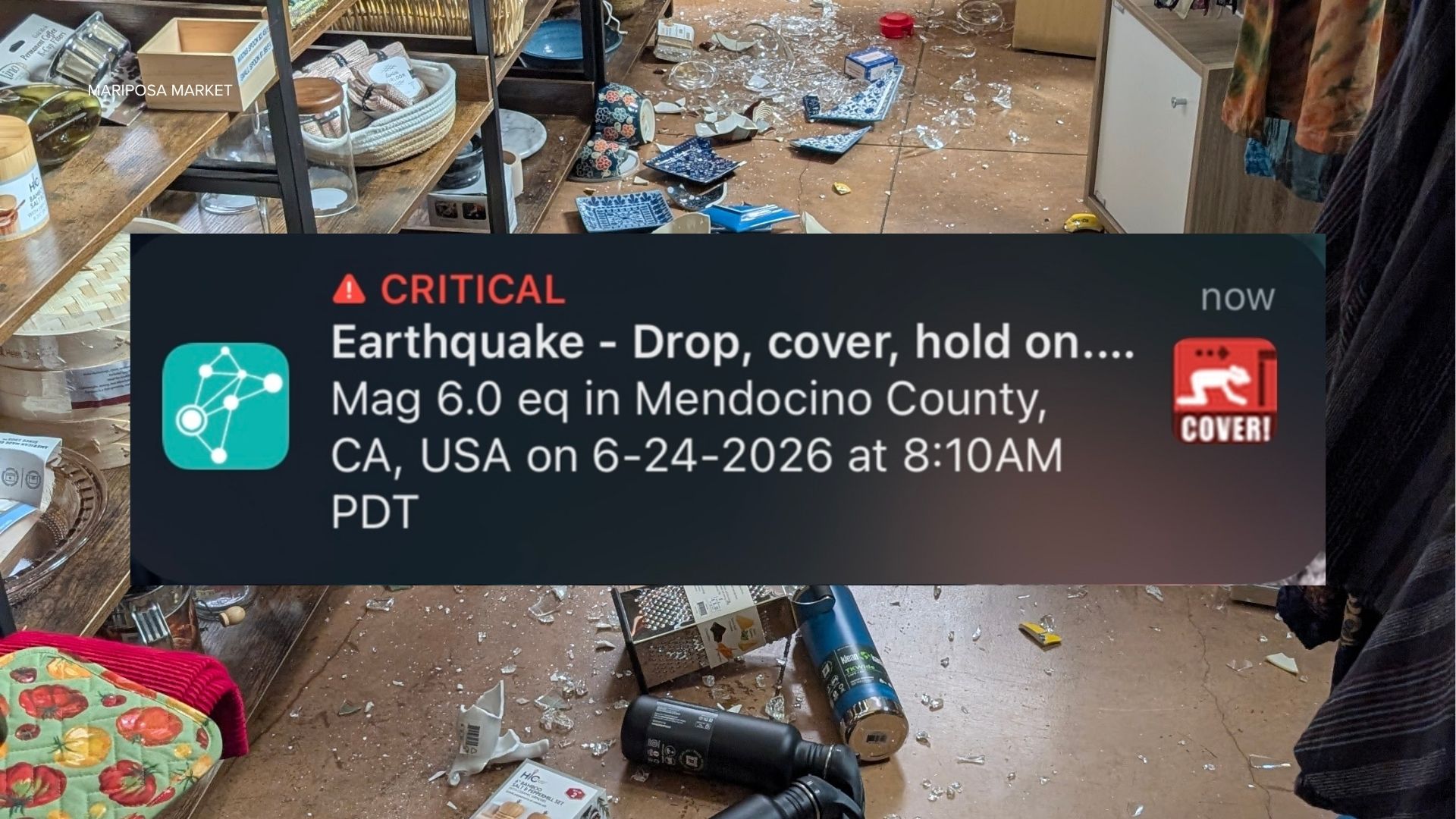

SAN FRANCISCO -- When large earthquakes hit, we are all so familiar with those sometimes startling alerts on our phones.
Many Bay Area residents were alerted by their phones Wednesday morning when a large earthquake struck in far-off Mendocino County, despite the fact that most people in the region didn't feel the slightest wobble.
When the magnitude 5.6 earthquake struck at 8:10 a.m., the ShakeAlert Earthquake Early Warning System sent notifications to well over 1 million people throughout Northern California, said Robert de Groot, a scientist with the U.S. Geological Survey Earthquake Science Center in Pasadena.
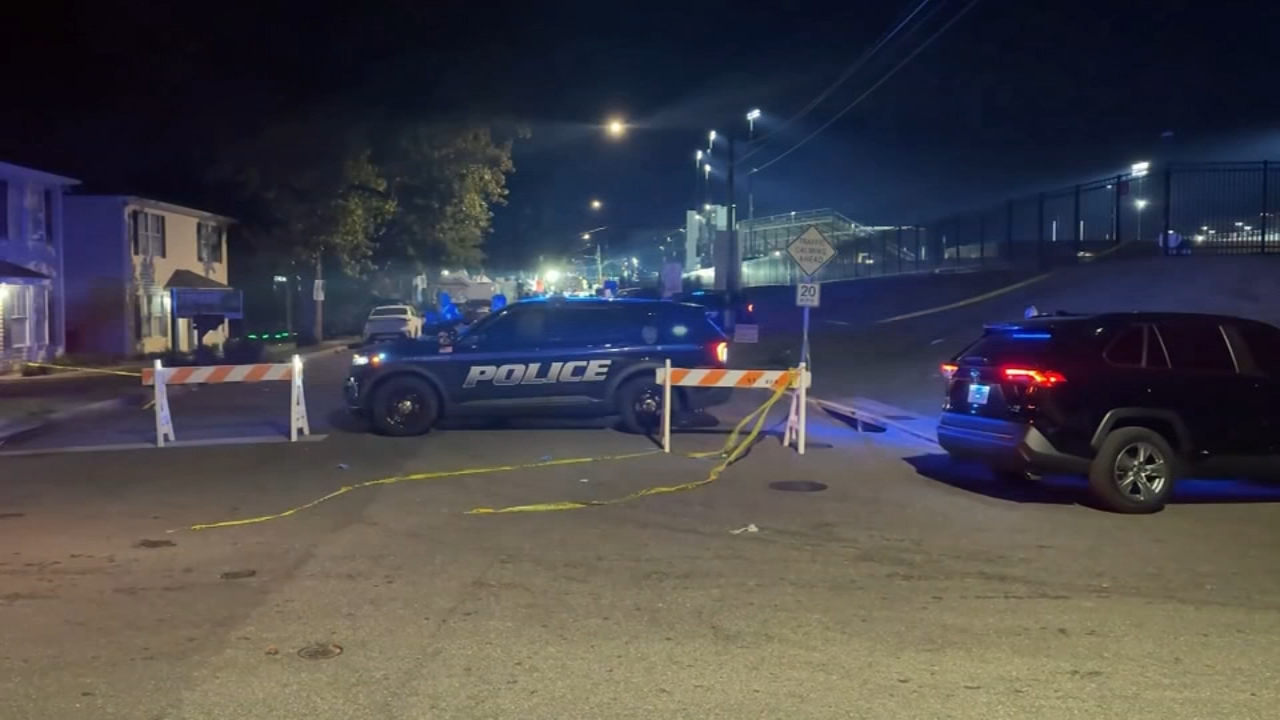
RELATED: Damage, injuries reported after magnitude 5.6 quake shakes north of Ukiah in Mendocino County
As soon as the quake hit, the ShakeAlert system published early warning information to USGS servers, and "the operators," including the iOS and Android operating systems, the Federal Emergency Management Agency's wireless alert system and the MyShake app, among others, received that data within seconds, de Groot said.
"It then goes out to people's cellphones," he said. "It's streamlined to move information, translating to what people should do within seconds of when that earthquake is starting."
"For the magnitude 5.6 earthquake near Redwood Valley today, the Shake Alert warning system performed exactly as designed," said de Groot, calling Wednesday morning's Shake Alert a success. "We're looking at something on the order of 597,000 alerts delivered just by the My Shake app. This number is likely to climb considerably when we get reports back from the operators of the Android and iOS operating systems who deliver alerts to their phones directly."
The system isn't an earthquake prediction service; it uses ground and satellite sensors to detect fault movement in real time.
The fastest-moving seismic waves are called primary or P-waves, and they travel at about 3.7 miles per second in rock and usually don't cause strong shaking. The P-waves are followed by slower-moving, more damaging waves called secondary or S-waves.
The ShakeAlert system reacts to the faster-moving P-waves and thus is able to give people a few precious moments' head start prior to the secondary waves' arrival.
"If you're super close to the epicenter of the earthquake, you're probably going to feel the earthquake before the alert," de Groot said. "It's blazing fast but limited by the laws of physics, unfortunately."
Early data indicates that at least 657,000 people got an alert from MyShake Wednesday, a number that's likely to end up being "well over a million" when the final tally comes in, he said.
Also, the reason people as far away as Oakland, Berkeley and Concord received the alerts is because the system's minimum delivery threshold is set at a "weak" Modified Mercalli Intensity value.
The MMI value is different from a magnitude measurement in that it represents the possible effects from a quake, like swinging lights or swaying buildings, rather than seismograph readings.


During a weak MMI quake, only a few people in taller buildings might feel any shaking, or it might feel like a truck is rumbling past someone's home, for example.
By alerting at lower MMI levels, MyShake gives people closer to the epicenter more time to react, de Groot said, but it also increases the distance at which people might get an alert even if they never feel the rumbling.
Also, there is variation in the system because different cellphone operating systems push out alerts at different thresholds, he said.
While some people might be confused after getting an alert for a quake that they can't feel or that's far away, de Groot said it's always good practice for when there is a major seismic event.
As for why some people in the same areas received an alert and others didn't...
"A lot of it has to do with what you have on your phone, how you have it set up. So, this is really one thing why we want to send people to Be Shake Alert Safe's website, is it shows people how to get their phones essentially set up to receive alerts," de Groot said.
He encourages people to not only rely on their smartphone's native alert system, but to also download the MyShake app.
The free app provides early earthquake warnings statewide with a magnitude of 4.5 or higher.
"I am thrilled with how the system performed this morning. We did a great job with estimating both the magnitude and the location of this event," said Angie Lux, project scientist of Earthquake Early Warning at Berkeley's Seismology Lab.
Lux says it's expected to see some discrepancy in first magnitude reports.
"The earthquake early warning system operates using just a few seconds of data, so it will use up to four seconds of data. But the initial alert can go out using just about a second of data," Lux said. "So, it's working really, really fast. And so, we think that having this small discrepancy is very normal for an earthquake early warning system, and that's what people can expect."
Now the experts really emphasized ensuring that your phones settings are toggled correctly to receive these early earthquake alerts, reiterating that the My Shake app is free and available in multiple languages.
"We want people to react to the drop, cover and hold on," he said. "We know that seconds matter."
More information about the ShakeAlert system can be found at www.Usgs.gov/faq/beshakealertsafe.
ABC7 Eyewitness News contributed to this report.