Massive data center projects spark backlash and protest from Pittsburg and Gilroy communities


PITTSBURG, Calif. (KGO) -- As artificial intelligence expands and demand for data storage grows, two Northern California communities are voicing frustration over large data centers already approved in their neighborhoods.
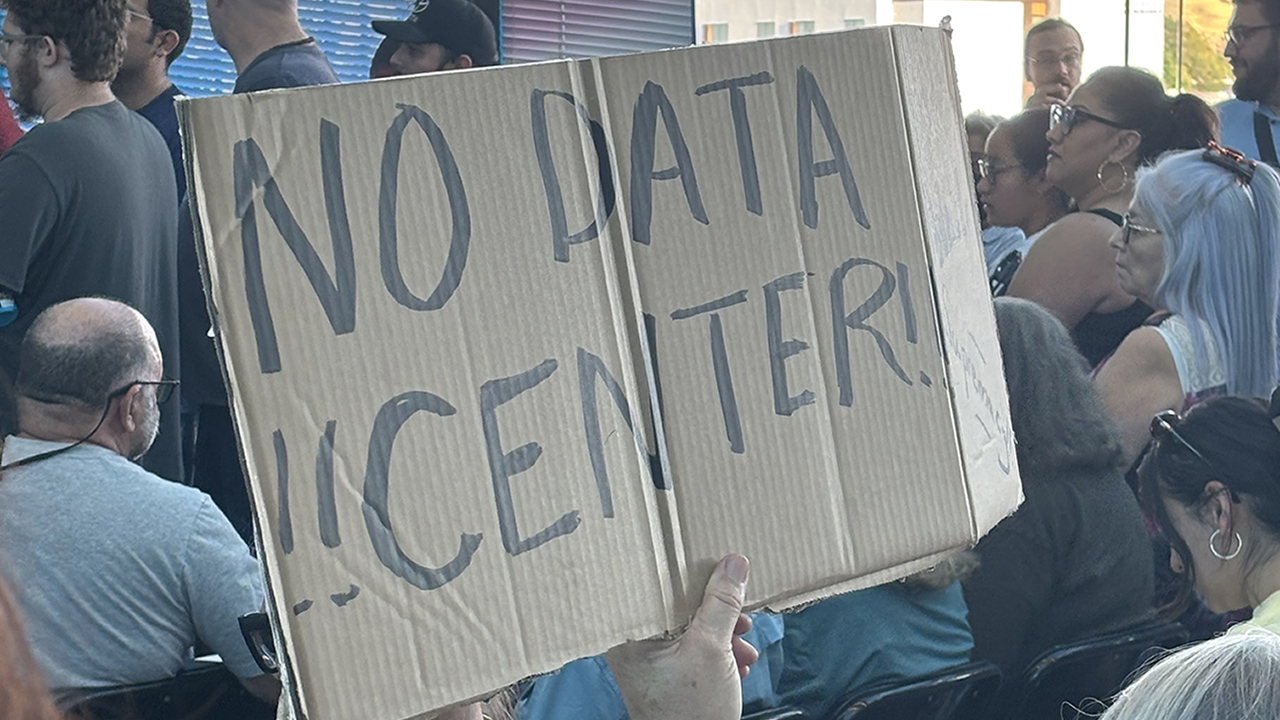
More than 300 Pittsburg residents showed up to Monday's City Council meeting in support of banning a data center development that the city approved in 2024.
They criticized plans to build a data center on the former Delta View Golf Course site.
"This is not the place for a data center," one speaker said during the meeting.
Roughly 90 miles south in Gilroy, residents expressed similar concerns about a separate data center currently under construction.
"I am beyond disappointed about this data center. I look at my daughter every day and I want the best for her," one resident said.
More than 100 public comments opposing the data center were made by Pittsburg Unified School District teachers and leaders, the progressive activist group Indivisible Resisters Contra Costa, community leaders, and parents.
University of Colorado Associate Professor and energy expert Kyri Baker said the concerns are understandable.
"We haven't seen something like this so close to people on such a large scale that consumes so much energy," Baker said.
Residents in Pittsburg have questioned the long-term costs of water and power.
Avaio Digital, the company behind the Pittsburg project, says electricity will come from the Pittsburg Power Company, which now serves nearly 400 residential customers and nearly 300 commercial customers on Vallejo's Mare Island. The company says the facility will use 100% recycled wastewater.
Baker noted that newer data centers tend to use less water than older facilities but said energy use remains a major issue.
"Data centers consume a lot of energy. There's no getting around that," she said.
In Gilroy, Amazon Web Services is building the new data center. The project will eventually use recycled water, and a fouracre substation is being built that will later be operated by PG&E. Baker said residential energy bills have increased in some areas with data center development, though some studies show prices can also drop.
Noise and emissions are among other concerns.
"There's definitely noise pollution close to data centers, just because you're gonna have a ton of fans running almost 24-7," Baker said.
She added that "there's also this big increase in emissions that will happen to a community, even if it's completely off-grid, because a lot of those off-grid ones are powered with carbon-intensive sources."
Baker said it is too early to know the full extent of the impacts in either community.
Canvassing for a pause
Lifelong resident Mark Linde, 68, has been organizing residents through the Nextdoor social media platform in recent weeks to voice their frustrations over the city's decision to approve the data center.
Linde has known about the data center development since 2018 and attended countless meetings where he raised concerns about the lack of resident input in the decision.



He asked the council to approve a two-year moratorium on the data center development and to create a citizens' oversight committee.
The three-story, 300-square-foot data center will generate 96 megawatts of power, cooled by recycled water, and house 37 diesel-fueled backup generators.
The facility will occupy the former Delta View Golf Course and is the first approved project in a three-phase development known as the Pittsburg Technology Park -- a name that has drawn criticism from residents who say it is misleading.
The data center will be built at the former golf course near a busy intersection, a middle school, and sports courts along West Leland Road.
MORE: Could booming AI raise your electric bill? Here's what has consumer watchdogs worried
What advocates say
In a phone interview, Jordan Davis, the director of community and economic development for the city, said tax revenue generated by the data center would help fund city programs and services, including road paving and youth soccer fields.
"These types of taxes are good for the community because the community does not need to pay them," Davis said. "It's revenue into the city to reinvest in the city."
When asked whether the city adequately communicated information about the development, Davis said the city went "above and beyond" to inform residents through public hearings and email blasts.
A lack of transparency
Amhari Perkins, a mother of two, created a Change.org petition to ban the data center that gained 13,000 signatures in one week.
Perkins said she only learned about the data center through a council member's Facebook post and heard similar concerns from neighbors who were unaware of the development.
During public comment, she asked the council to be transparent about the details of the project.
"Pittsburg is not just a small overlooked city. It is my home. It is a home where many families come together," Perkins said.
"Many of us are not asking for conflict, just meaningful communication."
Despite the city meeting legal requirements to notify the public by posting notices in public places, including the library and City Hall, many residents expressed frustration about learning of the data center years after the decision was approved.
Other residents questioned why the city approved the data center without fully engaging the broader community.
Nineteen-year-old Christina Webster criticized the council's decision to approve a data center that she said would increase water consumption and replace grasslands.
"Those mountains are never going to be green again," Webster said. "You are public servants. Serve the public!"
After two and a half hours of public comment, Mayor Dionne Adams said the council would follow up on residents' concerns and questions, though she did not provide a timeline.
Bay City News contributed to the story.

If you're on the ABC7 News app, click here to watch live