Aug. 3 update! Ranking top 2026 MLB trade deadline candidates

It's time for our final MLB trade deadline day update to our rankings! Major League Baseball's Aug. 3 trade deadline is upon us, and teams are entering all-out deal mode for this trade season.
Whether from contenders determining how big of a splash they are willing to make or basement dwellers deciding which stars to make available, MLB's trade market is ever evolving. And to keep you updated, ESPN's Kiley McDaniel and Jeff Passan have put together a list of 100 potential trade candidates and top potential fits that will be updated regularly leading up to the deadline.
Some of the players listed are unlikely to be dealt but at least are being discussed in potential deals. Others might not be on the list now but will be added in the future should their team's fortunes change. Either way, this is the most up-to-date accounting of where MLB's trade market stands.
Now on to the 100 names to know this trade season, starting with a game-changing ace. After that top-100 list, we break down the top players by position.
Note: This list was updated at 8 a.m. ET on Aug. 3 and will not be updated again for 2026. Players ranked by total trade value with rest-of-season value as tiebreaker (not odds of being dealt); 10% trade likelihood minimum
Jump to:Top players by position

Top 100 trade candidates

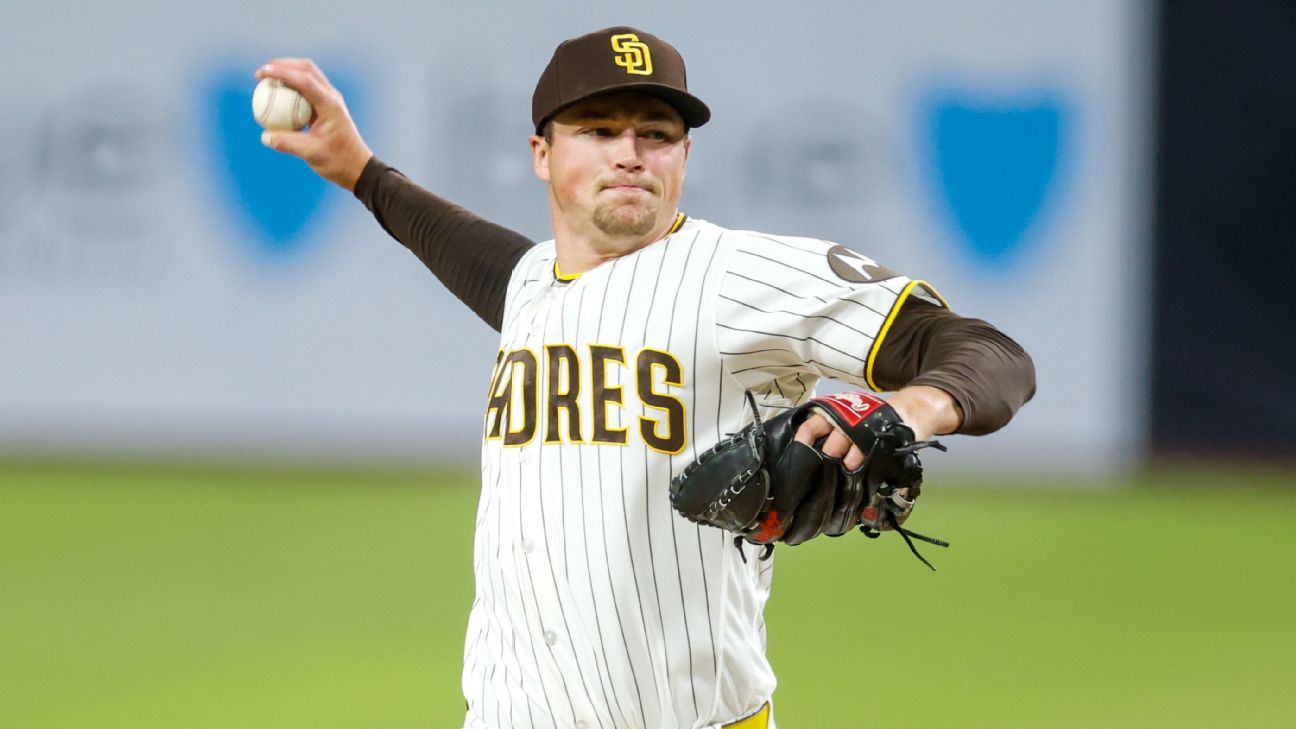
1. Mason Miller, RHP, San Diego Padres
Chance of being traded: 20%
Rest-of-season impact: High
Years of control: Three more years after 2026
The buzz: Less than a year after giving up one of the top prospects in baseball in shortstop Leo De Vries to acquire Miller, the Padres are considering moving him. They would love to attach Xander Bogaerts' onerous contract to any trade, but that would severely limit their return and, frankly, nobody's going to take it. That leaves the Padres in a position to dangle the best reliever in baseball and see what kind of bites they get. There will be plenty. Miller is a true game changer, the king of the ninth, and with even the best teams always in need of another lockdown reliever, Miller's status will run parallel with the Padres'. If they don't turn things around soon, he could be an ex-Padre by Aug. 3.
The scouting report: If you've watched baseball this year, you're aware of Miller's incredible performance (near the top of historical lists in ERA, ERA estimators, WAR, strikeout rate, etc.) and have a pretty good idea why what he does is working. The basic version is he throws really hard (101.3 mph on average for his four-seam fastball) and that arm speed makes his power sweeper even harder to hit.
That's true, but also, both are helped by Miller's big extension (80th percentile in baseball at 6.8 feet, which helps his fastball shape), his supinator bias (i.e., he naturally cuts all of his pitches), and his command (strong given his outlier velocity). Add all of those traits together with being a late bloomer from a small college, and you have the model teams are following now as they look for hidden gems outside of the top few rounds of the draft.
Best fits: Yankees, Mariners, Phillies, Brewers, Pirates, Rays

2. CJ Abrams, SS, Washington Nationals
Chance of being traded: 20%
Rest-of-season impact: High
Years of control: Two more years after 2026
The buzz: For all of teams' reticence regarding Abrams -- particularly with his propensity to have bonanza first halves and wither after the All-Star break -- his performance this season is undeniable. He hits for average. He hits for power. He steals bases. He drives in runs. All of that plus two years of control and he plays up the middle? Why isn't he higher? Evaluators simply don't think he's a good shortstop. Defensive metrics firmly agree. And among the limited number of teams looking to fill that position, the exceptional return that president of baseball operations Paul Toboni would seek and the Nationals still firmly in contention right now, it's probably not the time for Abrams to move.
The scouting report: Abrams is on pace for career highs across the board in his age-25 season, but as noted above, his defense and familiar patterns still make you wonder if this is the year it all comes together. He's an easy plus runner with strong bat speed/raw power and, like Pena, has leaned into the pull/lift elements (to the biggest degree this season) to get to his power in games. Is the solution to move him to second or third base or maybe even to center field? Can he keep this up all season? If he solves these questions, he might be on the road to becoming the star some envisioned in the 2019 draft.
Best fits: Braves, Rays, Yankees, Blue Jays

3. Zach Neto, SS, Los Angeles Angels
Chance of being traded: 40%
Rest-of-season impact: High
Years of control: Three more years after 2026
The buzz: The Angels are at the very least listening, which is more than they've done at past deadlines, and 25-year-old Neto is an awfully intriguing option when Jeremy Pena's and CJ Abrams' availability at shortstop is in question.
The biggest curiosity in the industry right now is just how much Angels owner Arte Moreno will allow interim general manager John Mozeliak to maneuver -- and if the full rebuild the team needs can start to happen under a temporary employee. Mozeliak is a veteran of trade deadline navigation and the winner of a World Series in St. Louis, so he's capable of executing any deal. And the return on Neto would be enormous. Four-win shortstops are not easy to come by, and Neto has consistently proved himself just that -- with room to grow.
The scouting report:Neto has been quietly very productive, the shortstop hitting ninth best in the league over the past three seasons (15% above average at the plate), while ranking fifth in homers (68) and stealing 69 bases.
He's a solid runner with a good arm but comes up a bit short in defensive metrics for his range, especially going up the middle (minus-16 runs in that area over the past three seasons).
Neto's spot on the power/contact spectrum and his range up the middle are the only two questions for teams to think about when acquiring him for his three-plus remaining control years.
Best fits: Red Sox, Braves, Blue Jays, Twins, Yankees

4. Jeremy Peña, SS, Houston Astros
Chance of being traded: 25%
Rest-of-season impact: High
Years of control: One more year after 2026
The buzz: After nearly signing a contract extension last year, Peña hired agent Scott Boras and put the kibosh on the deal. Now, Houston finds itself in a pickle: always wanting to contend, lacking the roster to do it.
Replenishing a bad farm system with few players close to the big leagues takes a move like trading Peña, and the only question at this point is whether it will be before Aug. 3 or before the Dec. 1 lockout. No longer are the Astros in the position they were when they held onto George Springer, Carlos Correa and Alex Bregman all the way to free agency. This is a Kyle Tucker situation -- only now the Astros aren't good, either, which could precipitate moving their shortstop before the deadline. The one potential drawback from Houston's perspective: There aren't a whole lot of contenders in the market for a shortstop, and it might make more sense to wait until the winter.
The scouting report: Peña has always been a plus defender at shortstop with a strong power/speed combo, but his feel for hitting and pitch selection comes and goes. He made the most of Daikin Park's Crawford Boxes by leaning into power and pull/lift, and his 2025 baseball card stats ran hot with better-than-you'd-expect outcomes on balls in play fueling a 5.7 WAR season. Expect more years in line with his other WAR figures (2.7 to 3.3) for the next few seasons.
Best fits: Braves, Rays, Yankees, Blue Jays, Red Sox

5. George Kirby, RHP, Seattle Mariners
Chance of being traded: 50%
Rest-of-season impact: High
Years of control: Under team control through 2028
The buzz: Seattle's openness to moving Kirby could be a deadline game changer, with the starting pitching market at a standstill and Kirby rising to the top of all non-Skubal arms. With a fastball that sits at 97 mph, arguably the best command of any starter in baseball and two years of club control beyond this season, Kirby is a prize for contenders and noncontenders alike. If he moves, the return will be hefty.
The scouting report: Kirby has plus fastball velocity and plus command; lots of evaluators say those are the two things they'd want most in a prospect because it hypothetically could make everything else work. Kirby hasn't quite reached ace status, though.
He throws his fastball (both four-seam and sinker) and sweeper 80% of the time combined. Both are plus pitches, but whiff rates are down a bit this year on both and he hasn't found a third pitch to attack lefties as effectively as righties.

6. Otto Lopez, SS, Miami Marlins
Chance of being traded: 35%
Rest-of-season impact: High
Years of control: Under team control through 2029
The buzz:One of the best pickups of the decade, Lopez has blossomed into a tremendously valuable player with great bat-to-ball skills. At a time when batting average around the league is at .244, Lopez is hitting nearly 80 points higher. Only a serious haul will make the Marlins consider moving him.
The scouting report: Lopez is having a career year with more extra-base-hit power and a bit more raw power, but he is more of a well-rounded player with elite contact along with strong baserunning and defensive value.

7. Hunter Goodman, C, Colorado Rockies
Chance of being traded: 20%
Rest-of-season impact: High
Years of control: Three more years after 2026
The buzz: Goodman was never even a top-10 prospect for the Rockies, lurking underneath the radar with his powerful right-handed stroke and enough chops to remain at catcher even as there were calls for him to move to first base. He has evolved into one of the best power hitters in baseball, following his 31-homer breakout last season with 30 pumps through the Rockies' first 101 games.
As much as the Rockies have waited years for another homegrown star, they are in such a dire pitching situation that Goodman at least offers them an opportunity to land high-ceiling arms. Colorado is not looking to deal him, but should the right suitor call, new president of baseball operations Paul DePodesta certainly won't hang up.
The scouting report: Goodman's scouting report that pushed him to the fourth round in the 2021 draft out of Memphis was pretty simple: big power/bat speed, iffy contact, iffy pitch selection, iffy defense behind the plate. That's still largely the report, though he has improved a lot behind the plate to be basically average now.
But Goodman also has plus-plus power and gets to it in games with a modern, pull-heavy approach; he's on pace for at least 40 bombs this year.
There's risk that any further regression in contact ability, pitch selection, bat speed, health or swing mechanics could make him one-dimensional, but park isn't a concern here: Both this year and over his pro career, his wRC+ is better on the road.
Best fits: Yankees, Red Sox, Phillies, Rangers, Rays

8. Luis Arraez, 2B, San Francisco Giants
Chance of being traded: 95%
Rest-of-season impact: High
Years of control: Just the rest of 2026
The buzz: Arraez has done more to improve himself in the eyes of teams than perhaps anyone on this list. His second-base defense this year is among the best in the league. Teams also understand how valuable putting the ball in play can be in the postseason, and nobody is better at that than Arraez, who is going to lead MLB in strikeout rate for the fifth consecutive season. With experience at first base, as well, Arraez's versatility expands his market, positioning him to join his fifth team in five years.
The scouting report: Among the least expected things to happen this season is Arraez going from one of the worst defensive second basemen in the league in 2023 to a below-average every-day first baseman in 2024-25 to a plus defensive second baseman in 2026. Behold the power of infield defense whisperer Ron Washington, the Giants' infield coach.
This improvement changes the outlook for Arraez, as slipping down the defensive spectrum is a big reason his free agent market was tepid. Now, his MLB-best contact ability combined with real defensive value means his lack of power and speed shouldn't keep him from posting a 3-win or even a 4-win season. The question is how long this new version will hold up, but he turned 29 in April, so presumably a few more years, at least.
Best fits: Rays, Nationals, Dodgers, Yankees, Blue Jays, Diamondbacks, Guardians, Pirates
9. Reid Detmers, LHP, Los Angeles Angels
Chance of being traded: 35%
Rest-of-season impact: High
Years of control: Two more years after 2026
The buzz:Detmers has the fourth-most strikeouts in the big leagues behind Misiorowski, Cristopher Sanchez and Dylan Cease, isn't walking hitters or giving up home runs, and is a metric darling on top of that.Complement all that with an additional two years of club control on top of the season and his value has skyrocketed this year, giving the Angels a genuine opportunity to start a long-needed rebuild the proper way. Of course, it's the Angels, so executives are skeptical that it will happen.
The Angels alsofired GM Perry Minasianat the end of June and replaced him with former Cardinals president of baseball operations John Mozeliak, so how much leeway owner Arte Moreno will give Mozeliak to potentially deal Detmers and others with multiple years of club control remains unclear at the moment.
The scouting report: Because it's the Angels, after taking Detmers with the 10th pick in the 2020 draft and seeming to be on the verge of becoming a strong third-starter type, they moved him to the bullpen for a year in 2025 only to just put him right back where he was in the rotation in 2024. The knock earlier in Detmers' career was that his breaking stuff wasn't crisp enough. But to his credit, he has steadily improved the velo/movement of his slider over the years while moving his softer curveball to be more of a sometimes pitch and adding velo to his now plus fastball.
Best fits: Cubs, Padres, A's, Mets, Cardinals, Orioles, Diamondbacks, Braves, White Sox, Rays, Nationals, Blue Jays

10. Adley Rutschman, C, Baltimore Orioles
Chance of being traded: 35%
Rest-of-season impact: High
Years of control: One more year after 2026


The Buzz: The Orioles aren't exactly looking to trade Rutschman, but they are certainly listening on the 2019 No. 1 pick. Rutschman's renaissance this season has come at a great time for Baltimore: He's a free agent after next season, Baltimore has Samuel Basallo locked up long term, and there's almost no chance of the sides coming together on a long-term deal. This wouldn't necessarily be a deal for prospects. Baltimore could find some under-control arms and flip from a position of depth to get there. While it makes plenty of sense, one potential impediment is that the teams most in need of catching are in Baltimore's division.Even so, Rutschman is good enough -- and the catching position important enough -- that if the Orioles become motivated to move him, they'll do very, very well.
The scouting report: Similar to Lindor, the sales pitch with Rutschman hasn't been footspeed or bat speed for a while; it's elite defense, makeup and being good at almost everything in the batter's box. Given the rigors of catching and Rutschman's own durability issues, his offensive variance dips a bit lower than you'd like, but his expected wOBA is now second best in his career, behind only his 5.5 WAR season in 2023.Rutschman is also on pace for the best defensive season in his career, above average at all three measured elements.
He is 28 years old and is controllable for this year and next as he seems to be regaining his old form. That timetable and the lowered expectations after a mixed 2024 and 2025 might serve the O's with a strong market while also clearing the way for Basallo to take the reins from another former top prospect.
Best fits: Rangers, Phillies, Reds, Pirates, Twins, Padres, Yankees, Red Sox

11. Clay Holmes, RHP, New York Mets
Chance of being traded: 90%
Rest-of-season impact: High
Years of control: Probably just 2026, with an opt-out after the season
The buzz: Holmes is set to make his first rehab start Thursday after missing two months with a broken leg, and he should be in the big leagues for his next start after that. He has shot up this list because teams' interest in him runs deep -- and the only reason he's not higher than 90% to go is due to the possibility of him remaining in New York on a contract extension. If he does move, Holmes is a playoff-caliber starter for all of the teams with interest, a groundball machine whose minuscule home run rate would play especially well in the postseason. Before he got hurt, Holmes' 2.39 ERA was one of the bright spots in an eclipse of a Mets season.
The scouting report: Holmes is, in many ways, a modern pitcher. He has the seam-shifted sinker, the kick changeup and the sweeper: the last three trendy pitches in the pitch design-crazed sport. He has an outlier ground ball rate and was a relief-to-starter conversion in pro ball with a supination movement bias (i.e., cuts the ball naturally); those are three more things teams are constantly on the lookout for. All of these buzzwords and trends add up to third starter performance in Holmes' case, and he has thrown over 70 innings only one time, but a savvy team might see a slight discount due to that shorter starter track record and contract commitment.
Best fits: Cubs, White Sox, Brewers, Orioles, Dodgers, Braves, Rays
12. Josh Hader, LHP, Houston Astros
Chance of being traded: 25%
Rest-of-season impact: High
Years of control: Two more years after 2026, at $19 million per year
The buzz: Considering the utter lack of high-end relief pitching available at the deadline, Astros general manager Dana Brown would be smart to explore trading Hader, even as Houston mounts a run toward a wild-card spot. Franchise stewardship entails understanding markets and using them to your advantage, and with teams packed so closely and in need of a differentiator, a lockdown ninth-inning arm is quite a way to differentiate. The one potential fly in the ointment: Plenty of teams are fundamentally against paying $19 million per year for a one-inning reliever.
The scouting report: Hader is one of the best examples of why so many teams are chasing pitchers with big extension and lower arm slots who can still get "lift" on their fastballs: The angle at which his pitch approaches the plate (very flat) makes it very hard for power hitters to get on plane. That means lots of whiffs and mishits at the top of the zone, which then also means any sort of decent or deceptive off-speed pitch will also play well as hitters gear up for the heater. Hader's bullet slider, placed below the zone, gives hitters fits for this reason: They miss on over half of their swings on the pitch
Best fits: Yankees, Cubs, Blue Jays, Mariners, Dodgers, White Sox, Diamondbacks
13. Foster Griffin, LHP, Washington Nationals
Chance of being traded: 55%
Rest-of-season impact: Moderate
Years of control: Just the remainder of 2026
The buzz: Griffin has quietly been one of the best pitchers in baseball. Signed for a year and $5.5 million out of three excellent years with the Yomiuri Giants, the 30-year-old has a 2.93 ERA (13th in MLB) and a chase rate in between Jacob Misiorowski and Drew Rasmussen. Griffin doesn't throw hard - among the top 10 pitchers in batting average against, his average fastball of 91.4 mph is nearly 3 mph less than the others - but his cutter-heavy seven-pitch mix is giving him real Seth Lugo-in-a-mirror vibes.
The scouting report: Pitchers often deepen or tweak their arsenal after spending time overseas and Griffin's is the former: his four-pitch mix in 2022 before heading to Japan is now a seven-pitch mix, including a changeup and splitter. He works laterally against lefties (sinker/cutter/sweeper) and more vertically against righties (four-seam fastball, cutter, curveball, changeup). Griffin has clear intention and feel to command, profiling now as an innings-eating third/fourth starter.
Best fits: Padres, Cubs, Diamondbacks, White Sox, Braves, A's, Pirates
14. Adrian Morejon, LHP, San Diego Padres
Chance of being traded: 40%
Rest-of-season impact: High
Years of control: Just the rest of 2026
The buzz: The Padres have a huge ask on Morejón, and with good reason. If he is dealt, he could very easily be the best reliever to move this deadline. Morejón is an impending free agent and at this juncture is likelier to go than Miller because of it.
The scouting report:Morejon has huge velocity, sitting 99-100 mph from the left side, backing it up with a slider and changeup en route to the fourth-best reliever WAR in the sport this season.

15. Casey Mize, RHP, Detroit Tigers
Chance of being traded: 60%
Rest-of-season impact: High if it continues to click
Years of control: Just the rest of 2026
The buzz:While Mize has twice hit the injured list with a strained groin, his most recent start illustrates why he'll be in high demand if Detroit decides to punt. He threw seven scoreless innings and allowed one hit while striking out 10 Yankees. Mize isn't popping any models with his stuff, but he's striking out more than a batter an inning, he's allowing less than a baserunner an inning, and his contract will be barely $2 million for the remainder of the season.
The scouting report: When Mize was taken with the No. 1 pick in the 2018 draft, some thought the only thing that could derail him from becoming a front-line starter was injuries -- and those certainly have derailed him a bit, but he could be breaking through now in his late 20s.
His fastball velocity is the lowest of his big league career, but he has four above-average pitches (fastball, cutter, sweeper, splitter) that are all performing (via runs value) as at least average pitches. The improvement this year was limiting damage on his fastball/splitter (by staying on the fringes of the zone) and juicing whiffs on the cutter (by tunneling with the fastball).
Best fits: Braves, Padres, Cubs, Brewers, White Sox, A's, Cardinals, Rays, Diamondbacks, Blue Jays
16. Luke Weaver, RHP, New York Mets
Chance of being traded: 70%
Rest-of-season impact: High
Years of control: One more after this season
The buzz:The top readily available relief arm on the market, Weaver can pitch in any inning and any situation. His four-seam fastball is an elite offering, and his changeup isn't far behind. He can close. He can handle the seventh inning. He can get out righties and lefties. He's exactly what teams are seeking this time of year.
The scouting report:Weaver has tweaked his four-seam/cutter/changeup usage and shapes over the past few years and is dealing with a power three-pitch mix, all coming at 88 to 95 mph on average.
17. Jackson Holliday, 2B, Baltimore Orioles
Chance of being traded: 40%
Rest-of-season impact: Moderate
Years of control: Not scheduled to reach free agency until 2031
The buzz: The former No. 1 overall pick in the draft (2022) and prospect in the game has brought his seasonlong line up to .260/.364/.403. Since the All-Star break, he is hitting over .400, and though the slug hasn't arrived, Holliday is still just 22 and would likely be flipped for pitching.
The scouting report: Hollidayhas upped his walk rate this year, but his power upside is closer to predraft expectations rather than when he was the top prospect in the sport. He is more a good player with good tools and feel rather than a future star.
18. Liam Hicks, C, Miami Marlins
Chance of being traded: 35%
Rest-of-season impact: Moderate
Years of control: Not scheduled to reach free agency until 2031
The buzz:While Hicks isn't particularly well-known, he should be. He is one of just six qualified players with a sub-10% strikeout rate -- and with an OPS around .800, that is a valuable every-day player. Thanks to Joe Mack's emergence, Hicks can be had, though if need be, the Marlins are plenty happy to play him at first base.
19. Isaac Paredes, 3B/1B, Houston Astros
Chance of being traded: 30%
Rest-of-season impact: Moderate
Years of control: One more year after 2026
The buzz: Paredes is only 27 years old but has been traded three times in the past four years. Houston's long-term infield glut and Paredes' free agency lining up with Peña's put Paredes squarely in the sights of teams looking for a right-handed bat. Though nobody's idea of a great hitter, he does specific things very well: pull the ball in the air and not strike out. Paredes will get on base around 34% of the time, bop you 20 home runs and can play corner-infield positions with reasonable competency. He's not a home run trade target. But a solid double? Sure.
The scouting report: Paredes doesn't have that much raw power, but he's elite at pitch selection and hitting the ball just right to take advantage of a short left-field porch, a huge reason the Astros traded for him in the Kyle Tucker deal. A more normal left-field wall will turn some homers into doubles and doubles into outs, which would pull his profile from above-average regular to lower-end regular. His lack of loud raw tools and a specific skill set makes evaluators wary of long-term projection, but the rest of this year and next is a reasonable time range to jump on board.
Best fits: Guardians, Mariners, Phillies, Pirates, Brewers, Reds
20. Jose Soriano, RHP, Los Angeles Angels
Chance of being traded: 25%
Rest-of-season impact: Moderate
Years of control: Two more years after 2026
The buzz: Since starting the season by giving up one run in his first 37 innings, Soriano has posted an ERA of 5.14 The. stuff still really plays, and plenty of organizations believe they can help work out the control kinks that can plague Soriano. Add to that the two years of control, and the same pitching-hungry organizations that want Detmers -- contenders and teams that intend to contend in the coming years -- will be interested in Soriano.
The scouting report: Since the time he entered pro ball in 2016, Soriano was more prospect than finished product until 2024 or 2025, including being a Rule 5 draft pick (and returned!) in 2021. Since late April, he has been roughly that third-/fourth-starter type that he has been in the big leagues. He's ranked this high because of the flashes, the years of control and the plus stuff grades from scouts and analysts on his pitches. A savvy pitching development team could realize tens of millions in value from acquiring Soriano and unlocking results that match the stuff/potential/flashes.
Best fits: Cubs, Padres, A's, Mets, Cardinals, Orioles, Diamondbacks, Braves, White Sox, Rays, Nationals, Blue Jays
21. Emerson Hancock, RHP, Seattle Mariners
22. Ryan Jeffers, C, Minnesota Twins
23. Matt Chapman, 3B, San Francisco Giants
24. Trevor Rogers, LHP, Baltimore Orioles
25. Riley O'Brien, RHP, St. Louis Cardinals
26. JJ Bleday, OF, Cincinnati Reds
27. Robbie Ray, LHP, San Francisco Giants
28. Jake McCarthy, OF, Colorado Rockies
29. Taylor Ward, OF, Baltimore Orioles
30. Mickey Moniak, OF, Colorado Rockies
31. Daulton Varsho, OF, Toronto Blue Jays
32. Christian Walker, 1B, Houston Astros
33. Lars Nootbaar, OF, St. Louis Cardinals
34. Gleyber Torres, 2B, Detroit Tigers
35. Trevor Larnach, OF, Minnesota Twins
36. Dustin May, RHP, St. Louis Cardinals
37. Jack Flaherty, RHP, Detroit Tigers
38.Matt Shaw, INF/OF, Chicago Cubs
39. Brooks Raley, LHP, New York Mets
40. Daniel Lynch IV, LHP, Kansas City Royals
41. Jeff Hoffman, RHP, Toronto Blue Jays
42. Brady Singer, RHP, Cincinnati Reds
43. Ryan Zeferjahn, RHP, Los Angeles Angels
44. Anthony Bender, RHP, Miami Marlins
45. Jo Adell, OF, Los Angeles Angels
46. Tyler Stephenson, C, Cincinnati Reds
47. Luis Robert Jr., OF, New York Mets
48. Kyle Finnegan, RHP, Detroit Tigers
49. Bryan Abreu, RHP, Houston Astros
50. Andrew Kittredge, RHP, Baltimore Orioles
51. Pete Fairbanks, RHP, Miami Marlins
52. Jarren Duran, OF, Boston Red Sox
53. Antonio Senzatela, RHP, Colorado Rockies
54. Heliot Ramos, OF, San Francisco Giants
55. Francisco Alvarez, C, New York Mets
56. Victor Caratini, C, Minnesota Twins
57. Lake Bachar, RHP, Miami Marlins
58. Josh Bell, 1B, Minnesota Twins
59. Wandy Peralta, LHP, San Diego Padres
60. Eugenio Suarez, 3B, Cincinnati Reds
61. Brock Burke, LHP, Cincinnati Reds
62. John King, LHP, Miami Marlins
63. Michael Petersen, RHP, Miami Marlins
64. Nathaniel Lowe, 1B, Cincinnati Reds
65. Brennan Bernardino, LHP, Colorado Rockies
66. Caleb Ferguson, LHP, Cincinnati Reds
67. Elvis Alvarado, RHP, A's
68. JT Brubaker, RHP, San Francisco Giants
69. Kenley Jansen, RHP, Detroit Tigers
70. Jason Adam, RHP, San Diego Padres
71. Kris Bubic, LHP, Kansas City Royals
72. Rico Garcia, RHP, Baltimore Orioles
73. Calvin Faucher, RHP, Miami Marlins
74. Willi Castro, UTIL, Colorado Rockies
75. Walker Buehler, RHP, San Diego Padres
Top players by position
Catcher: 1.Hunter Goodman, 2. Adley Rutschman, 3. Liam Hicks, 4.Ryan Jeffers, 5. Victor Caritini
First base: 1. Isaac Paredes, 2.Christian Walker, 3. Josh Bell, 4.Nathaniel Lowe,
Second base: 1. Luis Arraez, 2. Jackson Holliday, 3. Gleyber Torres, 4. Willi Castro
Third base:1. Isaac Paredes, 2. Matt Chapman, 3. Eugenio Suarez, 4. Mark Vientos
Shortstop: 1. Zach Neto 2. Jeremy Peña, 3. CJ Abrams, 4. Otto Lopez
Outfield: 1. JJ Bleday, 2. Jake McCarthy, 3. Taylor Ward, 4. Daulton Varsho5. Lars Nootbar
Starting pitcher: 1. George Kirby, 2. Reid Detmers, 3. Clay Holmes, 4. Foster Griffin, 5. Casey Mize
Relief pitcher: 1. Mason Miller, 2.Josh Hader, 3.Adrian Morejon, 4. Luke Weaver, 5. Trevor Rogers
]
Related Topics
- SPORTS
- ESPN
- ATLANTA BRAVES
- NEW YORK YANKEES
- NEW YORK METS
- PHILADELPHIA PHILLIES
- SAN DIEGO PADRES
- GRAY SONNY
- TEXAS RANGERS
- BOSTON RED SOX
- WARD TAYLOR
- DETROIT TIGERS
- MILWAUKEE BREWERS
- DETMERS REID
- MLB
- KANSAS CITY ROYALS
- CHAPMAN MATT
- MIZE CASEY
- CONTRERAS WILLSON
- TORONTO BLUE JAYS
- CHAPMAN AROLDIS
- ALCANTARA SANDY
- ARRAEZ LUIS
- WACHA MICHAEL
- ABRAMS CJ
- SKUBAL TARIK
- PENA JEREMY
- MINNESOTA TWINS
- ARIZONA DIAMONDBACKS
- WASHINGTON NATIONALS
- HADER JOSH
- CINCINNATI REDS
- PERALTA FREDDY
- TAMPA BAY RAYS
- BUXTON BYRON
- SAN FRANCISCO GIANTS
- COLORADO ROCKIES
- LOS ANGELES DODGERS
- CLEVELAND GUARDIANS
- CHICAGO WHITE SOX
- SHAW MATT
- ST LOUIS CARDINALS
- RYAN JOE
- LUGO SETH
- HOUSTON ASTROS
- SORIANO JOSE
- DURAN JARREN
- PITTSBURGH PIRATES
- JEFFERS RYAN
- WALKER CHRISTIAN
- ADELL JO
- TORRES GLEYBER
- ATHLETICS ATHLETICS
- SEATTLE MARINERS
- MIAMI MARLINS
- LOS ANGELES ANGELS
- BALTIMORE ORIOLES
- CHICAGO CUBS
- SUZUKI SEIYA