78-year-old woman dies from snake bites in Northern California: Sheriff
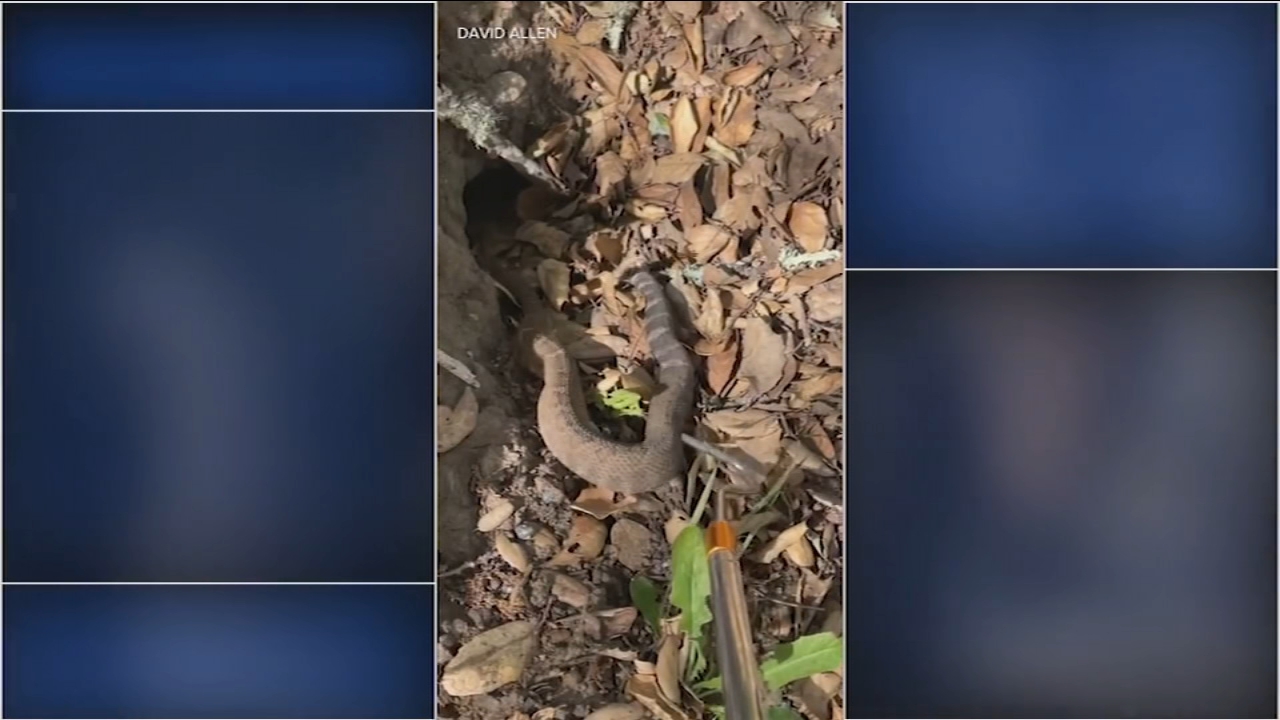

REDWOOD VALLEY, Calif. -- A 78-year-old woman has died from snake bites in Northern California, marking the third deadly snake bite victim in the state this year.
The woman was walking in a rural area in Redwood Valley on April 8 when she suffered three venomous snake bites, the Mendocino County Sheriff's Office said.
She was treated at a hospital but died on April 10, the sheriff's office said.
"There was a pretty good heat wave that kind of started things off. So snakes woke up a little earlier than expected," said David Allen.
Earlier than expected, but no less dangerous.
David Allen runs a Bay Area snake removal business and deals extensively with rattlesnakes. He says this time of year it's important to use extra caution.
"Intentionally interacting with an animal, that is a huge mistake. And that's how most people do get bit. Accidental bites are far less common than bites that occur when someone is trying to handle a rattlesnake," said Allen.
While about 7,000 to 8,000 people are bitten by venomous snakes each year in the U.S., only about five of those people die from the bites, according to the Centers for Disease Control and Prevention.
But this already marks the third deadly snake bite in California this year.
A 25-year-old man died after he was bitten by a rattlesnake while mountain biking in Irvine in Southern California in February, according to ABC Los Angeles station KABC. In March, a 46-year-old woman died after she was bitten by a rattlesnake while hiking at Southern California's Wildwood Regional Park, KABC reported.
"Bleeding or clotting. You might have nausea, vomiting, diarrhea. You might also feel your heart racing," said Dr. Peter Chin-Hong.
UCSF's Dr. Peter Chin-Hong says while the overwhelming majority of people who get bitten survive if they get medical attention, some basic tips can save your life.
"Despite folklore, don't suck the venom out. That's probably not going to result in any change in your clinical condition. Don't cut or try to squeeze the blood out because the venom really goes into the tissue and then gets into the circulation," he said.
Peak rattlesnake season is just getting underway. The California Department of Fish and Wildlife said bites are most common between April and October.
If you see a snake, you are encouraged to give it plenty of space to allow it to move away on its own.
If you are bitten by a snake:
- Stay calm and call 911.
- Don't try to suck out the venom or cut the bite.
- Don't apply restrictive bands or tourniquets.
- Don't apply ice or heat.
- Avoid alcohol, caffeine and medications unless directed by medical professionals.
- Lay still as much as possible until help arrives.
According to the California Department of Fish and Wildlife, California is home to seven species of rattlesnakes.
ABC7 Eyewitness News reporter Tim Johns contributed to this report.