Report finds weak oversight may put San Francisco supportive housing residents at risk

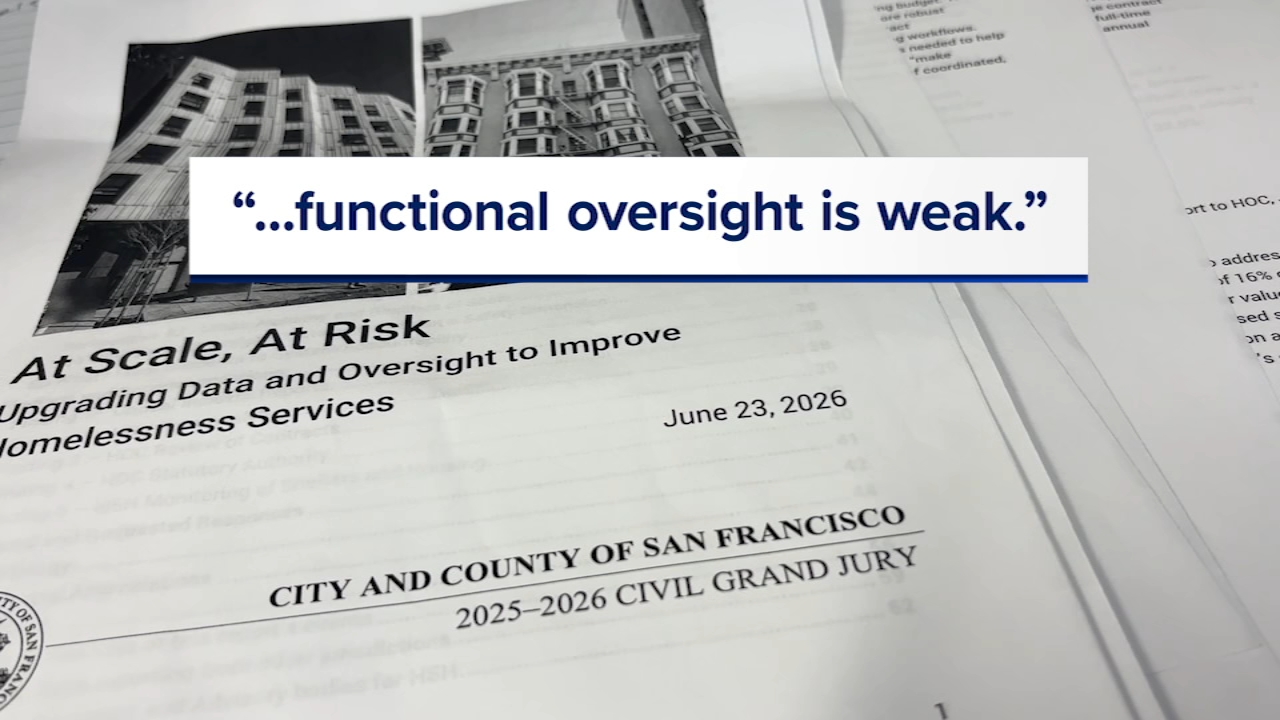
SAN FRANCISCO (KGO) -- A recent San Francisco Civil Grand Jury report found that weak oversight within the city's homeless services system may be putting residents of supportive housing at risk, raising questions about accountability, safety and the management of taxpayer-funded programs.
The report comes as city officials continue addressing concerns surrounding permanent supportive housing, where the Department of Public Health reported that 26% of all unintentional drug overdose deaths in San Francisco in 2024 occurred in such facilities.
For Aisha McCain, the issue is deeply personal.
"He was a beautiful person, he was brilliant, amazing and none of this should have happened," McCain said of her brother, Eric McCain who was 54 years old.
McCain's body was discovered last November inside his apartment at the Jazzie Collins Apartments, a supportive housing building managed by the nonprofit HomeRise.
His sister said staff had not adequately monitored his well-being before his death.
MORE: SF sees drop in unsheltered homelessness, reports 15-year low from most recent count
The fire department was called in once the body was discovered.
"He asked me when was the last time I talked to him. I told him around Halloween and then he asked the case manager who was on the phone with her supervisor when the last time they checked on him and she said a couple of days ago and he said that is not true and she gave another date and he said that is not true and so I said, is my brother decomposed? And he said, yes and I said but I need to see him and he said you wouldn't want to remember him like that," McCain said.
HomeRise is one of San Francisco's largest providers of housing and support services for formerly unhoused residents.
The organization previously came under scrutiny after a 2024 city controller's audit found it had misspent millions of taxpayer dollars while providing raises and bonuses to some staff members.
Rather than immediately ending its relationship with the nonprofit, the city placed HomeRise on a corrective action plan.
The Department of Homelessness and Supportive Housing, which oversees city contracts for supportive housing providers, had requested the audit.
The Civil Grand Jury report questioned whether oversight was sufficient, including the role of the Homeless Oversight Commission, which is tasked with monitoring the department's activities.
Bevan Dufty, a member of the Homeless Oversight Commission, defended the city's response.
"We had corrective action plans and part of the reason we have terminated four contracts with HomeRise is that after outlining what the problems were with guidance from the Controller's office, still two years later, things had not changed sufficiently," Dufty said.
The city has since terminated four contracts with HomeRise.
Those decisions came after Eric McCain's death became public and after the grand jury released its findings.
Gary Hsueh, a member of the Civil Grand Jury, said the report focused on improving safety for both residents and surrounding communities.


"How can we do it better in the face of a changing homeless population that is more and more acute and now that they are more and more acute, you would think that at a high level, safety should be a priority. Safety not only for those clients that are being housed at PSH and shelters but also safety in the surrounding communities and neighborhoods," Hsueh said.
The report also examined complaints from residents living near supportive housing and shelters.
In Nob Hill, neighbors raised concerns about activity surrounding a shelter at 711 Post St. operated by Urban Alchemy.
The city has adopted a universal Good Neighbor policy for all city-funded housing and shelter sites that will go into effect in October.
RELATED: SF names new Department of Homelessness director as city faces $643 million deficit
The policy requires operators to conduct regular perimeter checks, report disruptive behavior, document complaints and communicate with neighboring residents and businesses.
"It's a city-funded project, we need to make sure we're a good neighbor and make it easy for neighbors to report concerns but more importantly for the operators to be proactive and being a positive contributor to the neighborhood," said Emily Cohen of the Department of Homelessness and Supportive Housing.
Despite the policy changes, the department plans to close the 711 Post St. shelter next year.
Some residents of supportive housing say conditions around the facilities have worsened in recent years.
"It's gotten worse, girl. Worse, are you kidding me? Look what's out here, this is nuts," said Larry Tolliver, a permanent supportive housing resident who takes it upon himself to ask people to clear the area.
While city data shows homelessness has declined as more people have been placed in supportive housing, service providers continue to grapple with challenges related to fentanyl use, mental health issues and staffing shortages.
During a visit to the Jazzie Collins Apartments, a person was found unconscious outside the building.
Staff had not checked on the individual until alerted.
Emergency responders later transported the person to San Francisco General Hospital.
Dufty acknowledged the increasing complexity of operating supportive housing programs.
"The environment in which agencies that house people--much more complicated right now. Very difficult staffing levels, probably should be higher than what they are because we want to make sure that people are safe," he said.
For McCain, the reforms cannot come soon enough.
"There's no safety, there's no accountability, there's no follow up, there's no care, there's no compassion, at all," she said.
The Civil Grand Jury report concludes that stronger oversight and accountability measures are needed as San Francisco continues relying on supportive housing as a central component of its homelessness response.