Federal Reserve is expected to raise its benchmark rate, defying Trump's demands


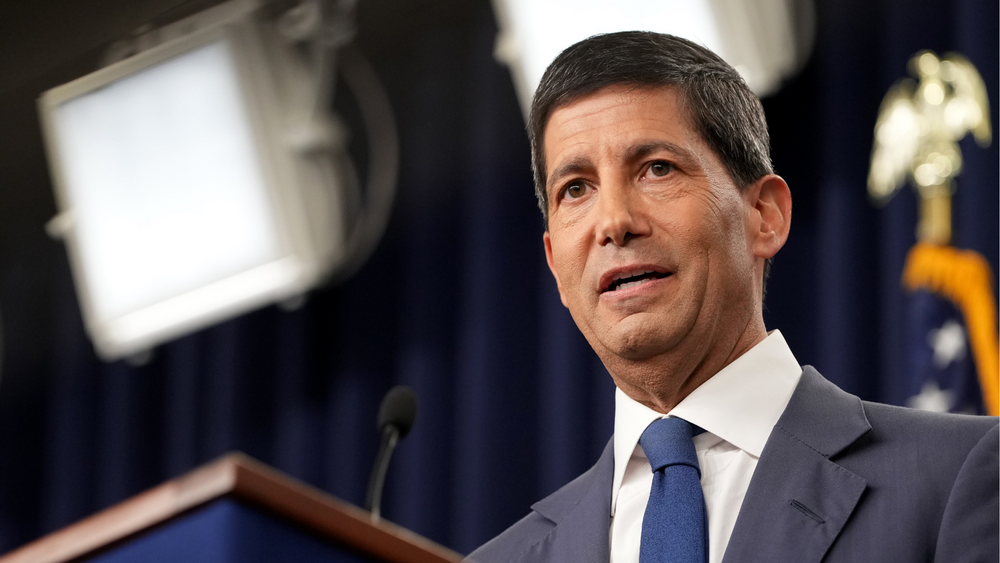
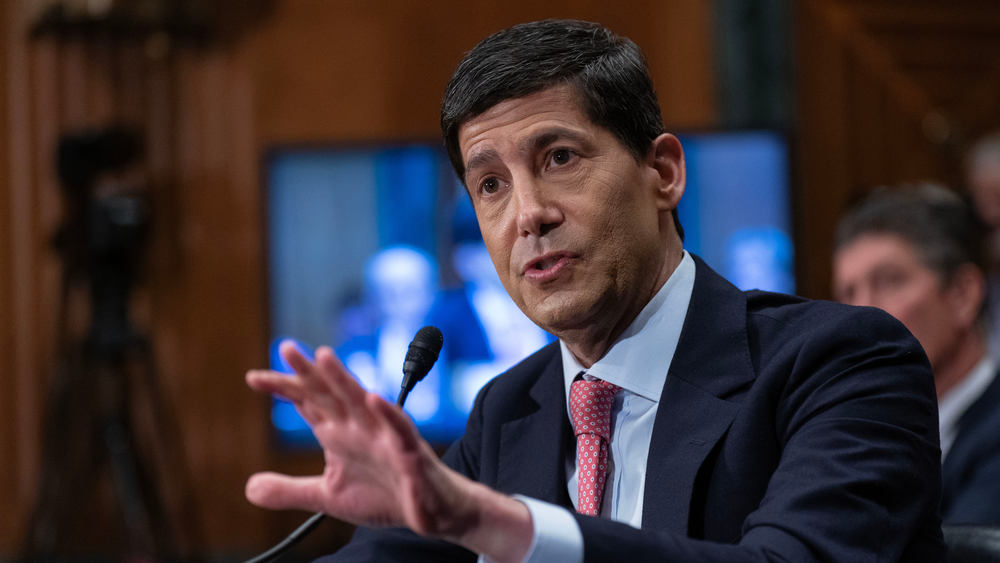
WASHINGTON -- The Federal Reserve is widely expected to lift its short-term interest rate Wednesday for the first time in three years to fight stubbornly high inflation, a move that would put the central bank at odds with President Donald Trump's support for a cut.
A quarter-point increase in the Fed's rate, currently about 3.6%, isn't guaranteed because Fed Chair Kevin Warsh doesn't provide the signals about next moves that his predecessors did. Still, most analysts and economists expect a hike after a speech two weeks ago at the Fed’s annual conference in Jackson Hole, Wyoming, in which Warsh argued that the Fed had not yet achieved its goal of putting inflation in check.
A rate increase would throw another sharp shift into a volatile period for the economy and financial markets. As recently as March, the Fed had forecast it would cut its rate once this year. But with the Iran war flaring up again and causing sharp increases in oil and gas prices, inflation is likely to remain higher than the Fed's 2% target for even longer.
“I don’t see any end to the war in Iran right now,” Kristin Forbes, an economist at MIT's Sloan School, said. "Given what everyone has been through in the last few years of high inflation, consumers are more sensitive, companies are more sensitive, they raise prices faster ... The risks are much more on more persistent inflation than it falling quickly.”
Surging investment in AI data centers has also been accelerating inflation and contributing to higher longer-term interest rates, though now leading companies are discussing slowing the technology's development.
All eyes are on interest rates before the midterms
The Fed's potential rate hike comes just seven weeks before the midterm elections in which high prices and affordability have taken key roles. Trump has demanded that the Fed cut rates, a move that isn't on the table, and on Sunday the president said, “the United States is so strong we should be paying the lowest interest rate in the world.”
Trump repeatedly attacked Warsh's predecessor, Jerome Powell, in harshly personal terms, upending decades of tradition in which presidents treated the Fed as independent.
Kevin Hassett, Trump's top economic adviser, said Sunday on CNN that Trump “100% respects the independence of Kevin Warsh.”
Yet at the same time, Hassett suggested in a Fox News interview that the Fed shouldn't hike so close to the midterms.
“I’d be wary of a rate hike ... I think if you want an independent Fed, then one thing the Fed does is it stays out of the way of elections," Hassett said.
Financial markets expect that Warsh and the central bank will brush off such warnings. Traders now see a 90% chance the Fed will hike Wednesday, according to futures prices. That figure jumped after Friday's inflation report showed that prices remain stubbornly high and core inflation, which excludes volatile food and energy, picked up in August from the previous month.
After that report, and Warsh's tough talk on inflation late last month, most economists argue that Warsh will have to hike rates or risk undermining his credibility with financial markets. Longer-term interest rates, such as those on the 10-year and 30-year Treasury bonds, could spike if he doesn't hike, as they did after a Fed meeting in late July when Warsh failed to convince markets he was willing to lift rates if needed.
“At the end of the day the Chair’s repeated stern warnings on inflation intolerance risk institutional credibility absent some action to back it up,” Michael Feroli, an economist at JPMorgan Chase, wrote in a preview of the Fed's meeting.
A rate increase could raise other questions
Some members of the Fed’s interest-rate setting committee still expect inflation, outside of food and energy, to fade over time and may not feel a rate hike is necessary.
But Warsh has not made that argument. Instead, in his Jackson Hole remarks, he said recent inflation reports “do not tell me that underlying trends have improved,” adding that if such improvement wasn't seen soon, “we have work to do.”
Ironically, by boosting Fed credibility, a rate hike could hold down longer-term interest rates that consumers pay for things like mortgages and auto loans. Some of the recent spike in mortgage rates has likely reflected concerns among investors that the Fed wasn't committed to fighting inflation. Investors typically demand higher yields to own bonds when inflation is elevated.
Still, if the Fed does increase its rate Wednesday, then Warsh will face a new set of questions: How many hikes will the Fed implement? How effective will they be in reducing inflation when much of it stems from higher oil prices, something the Fed can't control? What will they do if an AI slowdown threatens to slow the economy, which would typically get the central bank to cut rates?
Matthew Luzzetti, chief U.S. economist at Deutsche Bank, said it is rare for the Fed to lift its key rate just once, which is likely to have little impact on the economy, and so multiple hikes are likely.
But how the Fed characterizes possible rate increases on Wednesday could give clues to its next steps, he said. For example, if Warsh suggests the Fed is unwinding the three cuts it made in late 2025 — when it feared that unemployment was rising — that would suggest two more hikes would be needed.
Alternatively, Warsh could portray a hike as an act of “risk management,” Luzzetti said, with the Fed expecting inflation to cool but hiking rates to essentially ensure it falls. That could point to possibly just two increases.
Warsh has resisted providing such guidance so far. But Wall Street traders expect three hikes — in September, December, and March — according to futures prices.