El Niño-driven Kelvin wave could raise Bay Area sea levels by up to 1 foot, scientists say

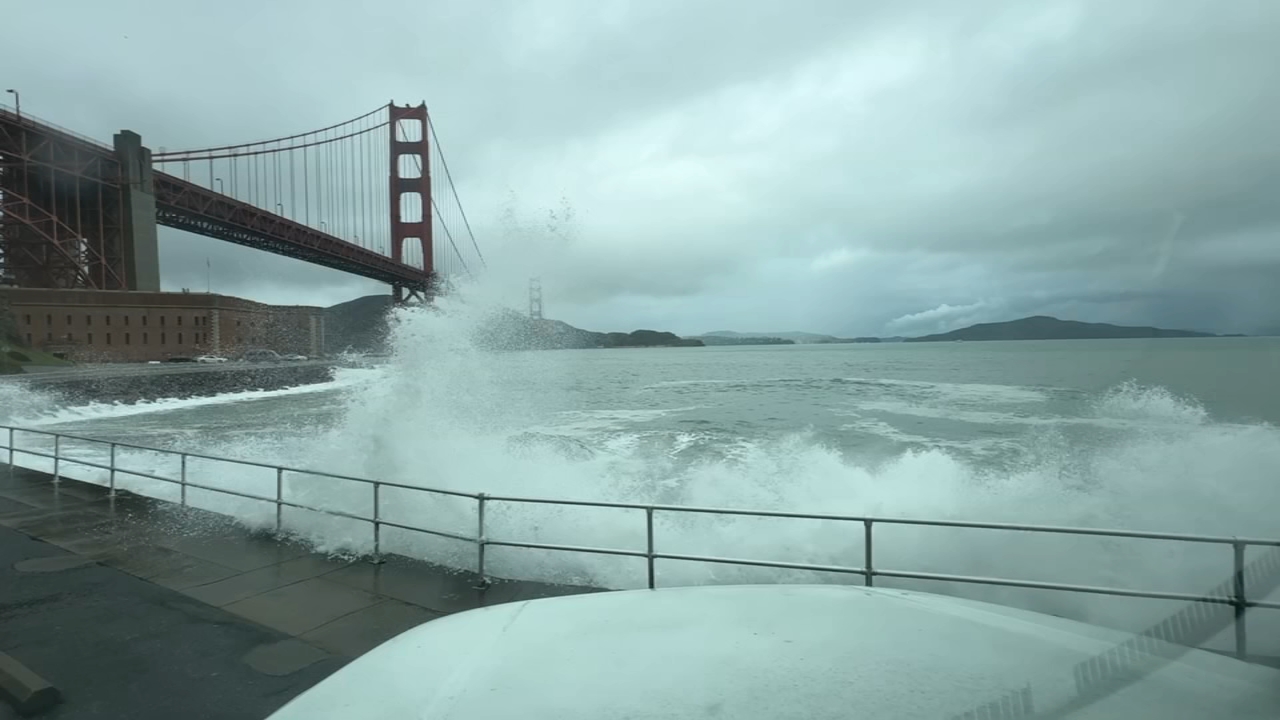
SAN FRANCISCO (KGO) -- A little-known ocean phenomenon linked to El Niño is making its way toward California and could raise Bay Area sea levels by as much as a foot this fall, increasing the risk of coastal flooding across the region.
Scientists say a Kelvin wave is expected to arrive along the California coast by October.
Unlike the waves seen breaking along the shoreline, a Kelvin wave is a large-scale pulse of ocean energy that travels across the Pacific Ocean. While it won't be noticeable to swimmers or beachgoers, it can cause sea levels to rise by 6 to 12 inches.
"It's a bulging of the nearest 20 to 30 kilometers of the ocean that propagates up the coastline," said Dillon Amaya, an assistant professor of marine science at North Carolina State University.
Kelvin waves form in the western equatorial Pacific when trade winds weaken, allowing warm water that has accumulated in the region to move back toward South America.
MORE: Bay Area nonprofit urges residents to prepare for El Niño, potentially dangerous weather this winter
"When the winds relax, it allows a lot of that really warm elevated water in the western equatorial Pacific to essentially slosh back toward South America as a wave," Amaya said.
The energy from the wave doesn't stop when it reaches South America. It continues traveling north along the coastline and can influence sea levels along the U.S. West Coast, including the Bay Area.
According to Amaya, Kelvin waves do not transport large amounts of water. Instead, they carry a signal that raises ocean levels.
"There's no mass transport here. It's not transporting water. It's transporting a signal, and that signal is an elevated sea state," he said.
The additional rise in sea level could create flooding concerns for low-lying coastal communities, particularly if the elevated water levels coincide with king tides, storm surge, or winter storms.
MORE: Bay Area communities step up flood preps as CA could face 'historic' El Niño winter
One city paying close attention is Sausalito, where officials are already preparing for the possibility of increased flooding this winter.
"This is an urgent issue for Sausalito, and we are taking immediate action," said Vice Mayor Melissa Saxe Blaustein.
The Sausalito City Council recently authorized $250,000 for projects aimed at mitigating the impacts of El Niño, flooding, and sea-level rise. One planned project involves raising a flood-prone roadway near Varda Landing by several inches before an upcoming king tide event.
While sea-level rise and tidal flooding are already challenges for the waterfront community, city leaders say El Niño-related impacts could make conditions worse this season.
The Port of San Francisco also says it is preparing for potential flooding by reviewing storm response protocols, inspecting stormwater infrastructure, and ensuring public works crews and resources are ready for possible impacts.
MORE: El Niño is strengthening: Here's what it means for the US
Amaya said Bay Area water levels are already elevated, running about six inches above normal. The incoming Kelvin wave is expected to add to those higher-than-average conditions.
"The Bay Area is already experiencing elevated sea states," he said. "This coastal trapped wave will only add to that."
Scientists expect this will not be the only Kelvin wave to affect the region. Amaya estimates that three to four additional Kelvin waves could arrive during the fall and winter, helping keep water levels elevated for months.
He estimates sea levels in the Bay Area may not return to more typical conditions until spring 2027.
For Bay Area communities along the shoreline, the arrival of the Kelvin wave serves as a reminder that even invisible changes in the ocean can have real-world impacts on roads, infrastructure and flood-prone neighborhoods.