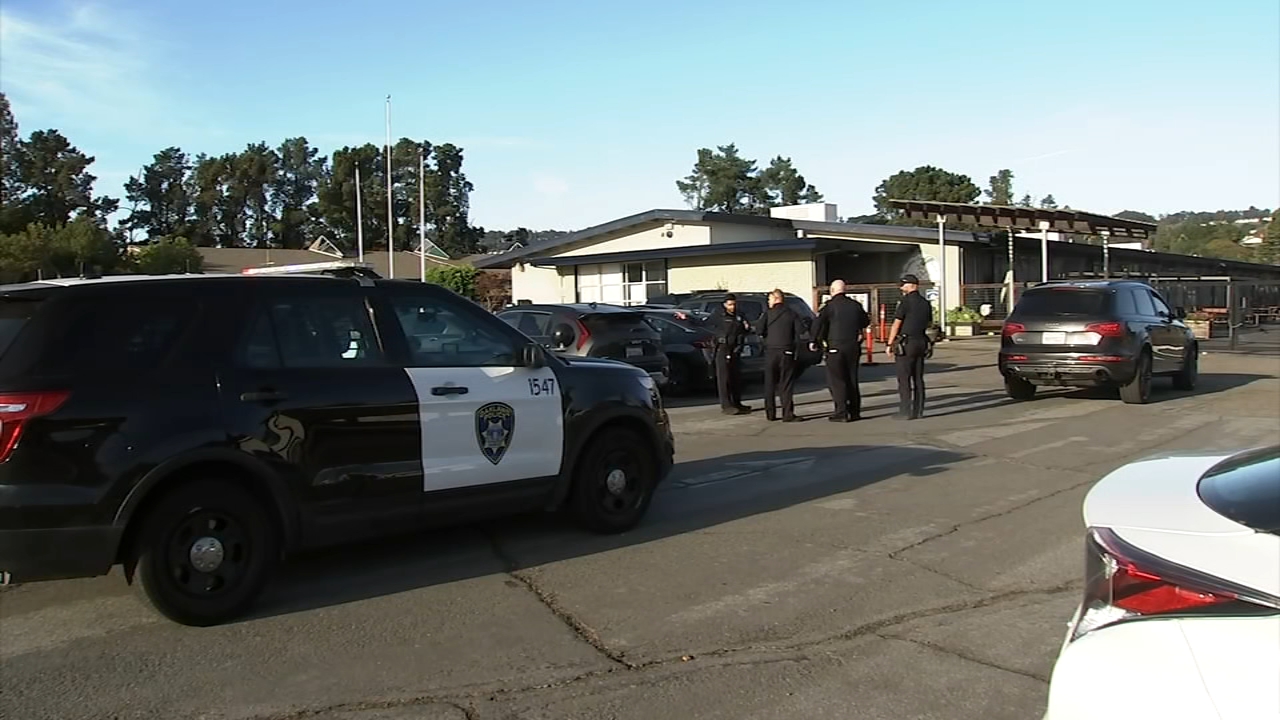
Federal court ends historic 23-year oversight of Oakland Police Department


SAN FRANCISCO (KGO) -- A federal judge on Tuesday officially terminated the federal court oversight of the Oakland Police Department, bringing an end to the longest-running police monitorship in U.S. history.
"I'm particularly grateful to the men and women of the Oakland Police Department... for achieving substantial compliance," San Francisco U.S. District Judge William Orrick said during the hearing. "May it ever be thus."
The rigorous oversight stems from a 2003 settlement of the notorious "Oakland Riders" scandal. The department first made national headlines in 2000 after a rookie officer blew the whistle on a corrupt group of veteran officers known as the "Riders." Operating primarily in west Oakland, a predominantly Black neighborhood, four officers were accused of brutalizing suspects, making false arrests, planting evidence, and falsifying police reports.
Following the scandal, the subsequent civil settlement mandated 51 sweeping reform measures. The criminal cases against the officers, however, yielded mixed results: three of the "Riders" were acquitted after two separate juries deadlocked on most of the charges, while the fourth officer fled the country and remains a fugitive.
RELATED: Oakland police on track to exit federal oversight by September, judge says
Overcoming two decades of systemic hurdles required sustained effort across generations of city leadership. "This is a new police department," Oakland Mayor Barbara Lee said. "The reforms, the 51 tasks, the work that have taken place over several mayors, over several police chiefs, over many many city staff... that work has led us to this day."
With the federal case closed, full authority over police discipline, policy, and compliance now shifts to the Oakland Police Commission, an independent body of local citizen volunteers.
While the ruling marks a historic milestone, department leadership emphasized that the work of reform is not finished.



"This is just the ground floor. It's not the ceiling," Oakland Police Chief James Beere said. "We will be continuing to work to just better ourselves. To make sure we are doing this safely, constitutionally, and in the principles of 21st-century policing."
The Associated Press contributed to this article.